
Criminal Court Cases in East Baton Rouge Parish
The Nineteenth Judicial District Court hears felonies and district-level state criminal matters. Its fifteen divisions and four commissioners create calendars, minutes, rulings, and judgments. The East Baton Rouge Clerk of Court keeps those files. The district attorney, jail, and arresting agency each hold different records.
Baton Rouge City Court hears city criminal, traffic, and qualifying misdemeanor matters. Central and Zachary maintain municipal dockets. Juvenile delinquency files follow confidential rules. A search in the wrong court can come back empty even when a valid case exists.
Division matters at the district level because calendars and minute entries identify where an event occurred. A name alone can point to several people or several prosecutions. Match the docket number, division, filing year, and another available identifier before treating a result as the correct East Baton Rouge Parish court case.
East Baton Rouge Court Routes
Jurisdiction is a court's legal power to hear a matter. State felonies usually belong at the 19th JDC. Baton Rouge ordinances and some misdemeanors may stay in City Court. Central and Zachary staff handle their own dockets. No verified parish-wide portal merges all four.
| Court | Coverage | Contact |
|---|---|---|
| 19th JDC | Felony and district cases | 300 North Boulevard |
| Baton Rouge City Court | City criminal and traffic | 225-389-5279 |
| Central Municipal Court | Local ordinance and traffic | 225-262-5000 |
| Zachary City Court | Assigned city matters | 225-654-0044 |
Note: Justice of the Peace courts are not substitutes for an East Baton Rouge Parish district criminal case search.
Start with the alleged offense location and the court named on any citation, bond paper, or hearing notice. Those details are more dependable routing clues than a broad name query. If the district clerk has no match, check the proper city or municipal clerk before concluding that no court record exists.
East Baton Rouge Parish Case Record Searches
Clerk Connect offers account-based access for participating clerks. Full search or document access is gated. The clerk's criminal desk is the fallback for non-subscribers, archives, and certified copies. Request the charging instrument, minute entries, disposition, or sentence by name.
- Log in and select East Baton Rouge plus the criminal module.
- Use an exact case number, or try name variants.
- Narrow common names by filing year and division.
- Match the court and another identifier before relying on a hit.
- Ask the clerk for archived or certified documents.
| Field Label | Type | Required | Notes |
|---|---|---|---|
| Username | Text | Subscriber | Account credential |
| Password | Password | Yes | Account credential |
| Parish/module | Select | After login | East Baton Rouge criminal/index |
| Name | Text | One key | Try variants |
| Case number | Text | Alternative | Best key when known |
| Year range | Date | Optional | Narrows results |
When Clerk Connect Is Gated
The index is not promised as a free anonymous search. Give the clerk a full name, approximate filing year, and case number or division if known.
The official clerk gateway identifies the custodian.
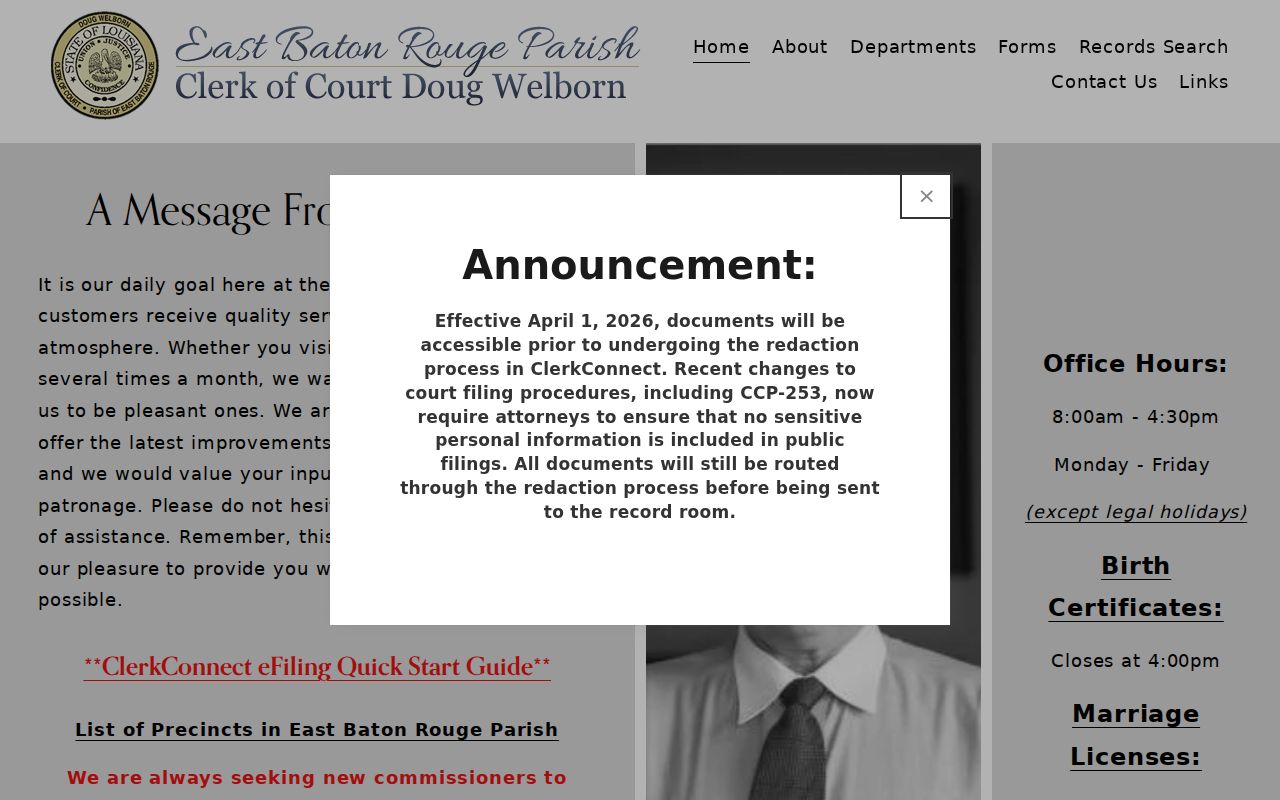
The clerk remains the source when remote access fails.
The Clerk Connect login shows the account gate.
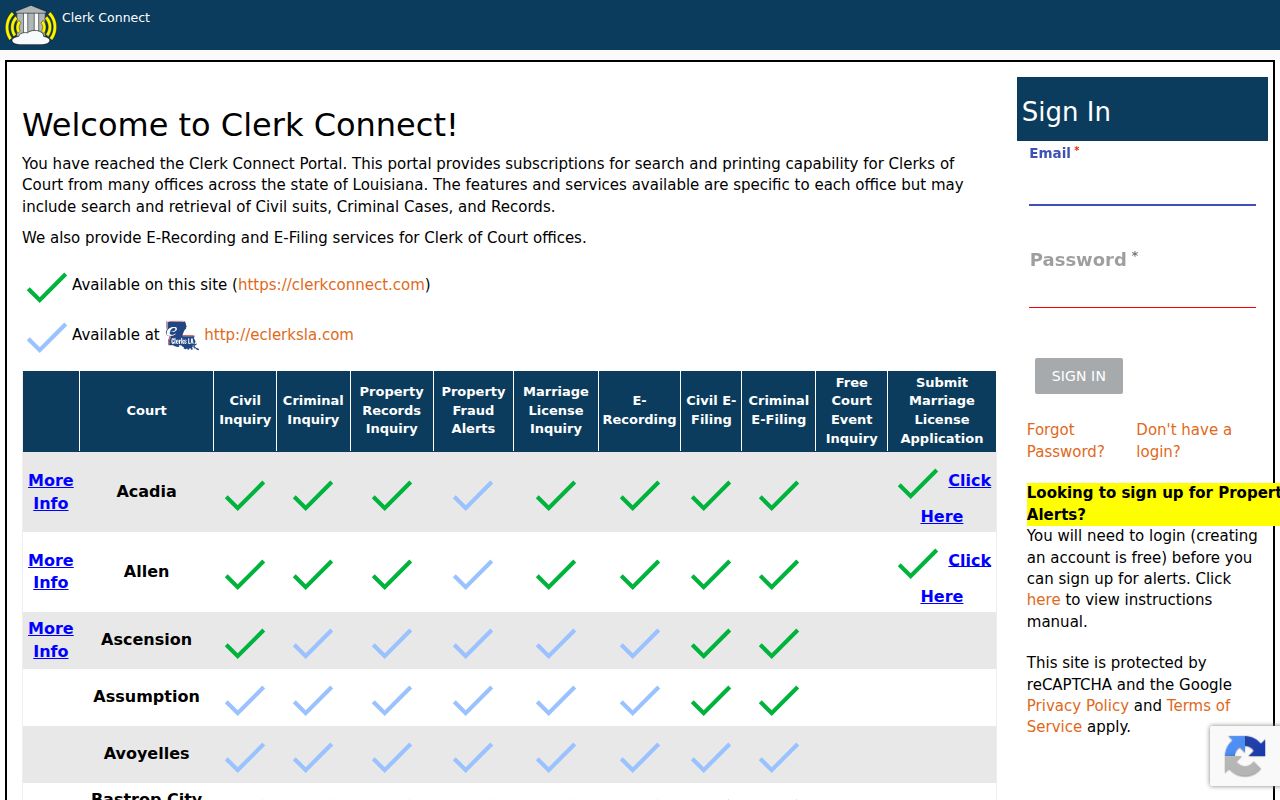
A login screen does not prove a case is absent.
What a Criminal Case File Contains
An East Baton Rouge file identifies the court, division, filed charge, lawyers, motions, settings, bond action, disposition, sentence, and appeal references. A capias is an order to take a person into custody, often after a missed setting.
The charging paper states what the prosecutor brought to court. Minute entries then track arraignment, counsel, motions, continuances, trial dates, pleas, and program referrals. The judgment and sentence supply the result. Reading only the first docket row can miss a later dismissal, amendment, plea, or acquittal.
| Case Number & Court | Unique docket, court, and division. |
|---|---|
| Charging Document | Bill of information or indictment. |
| Docket Entries | Pleas, motions, bond, settings, and rulings. |
| Hearing Dates | Past and scheduled events. |
| Disposition & Judgment | Dismissal, acquittal, plea, or conviction. |
| Sentence & Conditions | Custody, probation, fines, and terms. |
East Baton Rouge Filed Charges
A booking charge is the officer's allegation at intake. The district attorney may refuse, amend, or replace it by bill of information. A grand jury may indict. Thus, the charging paper and final disposition are stronger proof than the booking label.
- Nolle prosequi
- The prosecutor formally stops a charge, not a trial acquittal.
- Acquittal
- A not-guilty adjudication.
- No-bill
- A grand jury declines to indict.
The East Baton Rouge arrest search covers booking records.
Ask for the actual bill of information or indictment when a docket summary uses an abbreviated offense label. Then pair it with the latest minute entry and judgment. That sequence shows whether a count remained pending, changed by plea, was dismissed, or reached trial.
Criminal Case Stages in East Baton Rouge Parish
An initial appearance addresses cause, custody, and bond. The DA screens the report. A bill or indictment starts formal prosecution. Arraignment brings a plea. Discovery, motions, settings, and program review may precede plea or trial. Conviction leads to sentence; dismissal, refusal, acquittal, or no-bill ends differently.
Case flow: Charges Filed › Arraignment › Pretrial › Plea or Trial › Disposition › Sentencing
A continuance moves a setting without deciding the charge. A motion can address proof or procedure before trial. A plea can resolve some counts while others are dismissed. If an event code is terse, request its minute entry or judgment instead of guessing. An appeal also creates a distinct appellate record.
East Baton Rouge Specialty Dockets
The 19th JDC lists Recovery Court, Re-Entry Court, Veterans Treatment Court, Pretrial Services, diversion, and a domestic-violence pilot.
The court interface documents these programs.
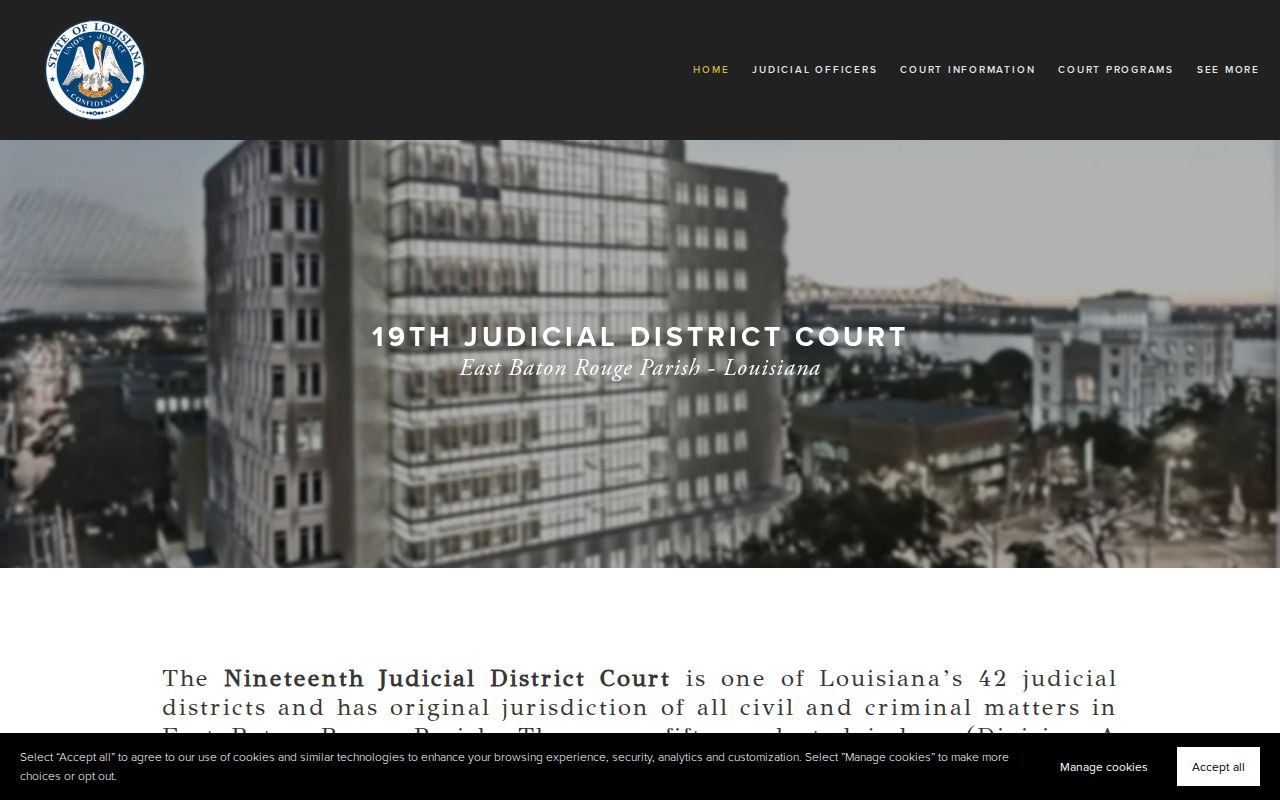
Program events should not be mistaken for final dispositions.
The DA pretrial program is discretionary and non-adjudicatory.
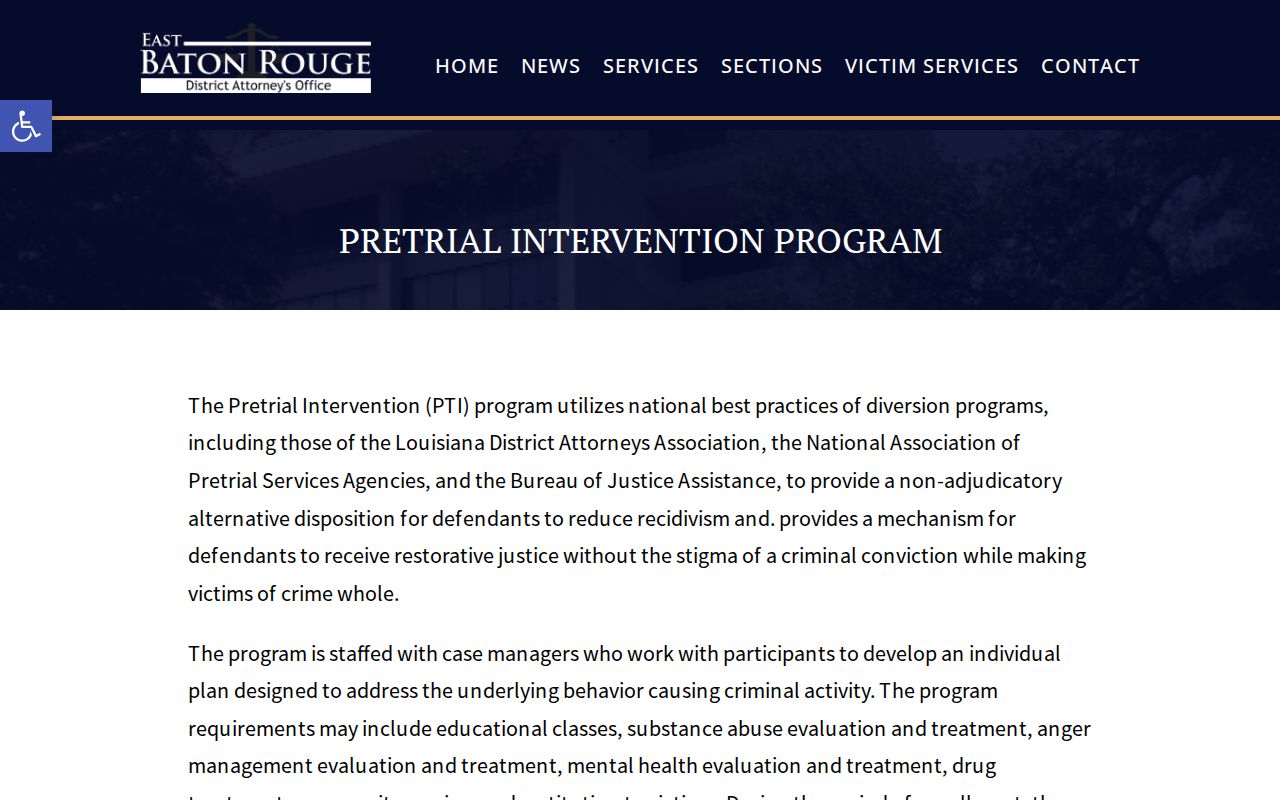
Participation is not itself a judgment of guilt.
East Baton Rouge Case Data Limits
DA Commons offers aggregate flow trends, not an individual docket. The district attorney source links the work.

Verify one outcome with the clerk.
The public defender office is the local defense source.
An attorney listing does not prove an outcome.
Certified East Baton Rouge Dispositions
A certified disposition is the clearest clerk-issued proof of how a filed case ended. It is more useful than an arrest charge, a roster entry, or an early docket event because it comes from the court file and carries the clerk's authentication. Ask for it by case number. If that number is unknown, provide the full name, approximate filing year, and likely court or division.
Requesting specific documents also keeps the search focused. The bill of information or indictment shows the filed counts. Minute entries reveal pleas, motions, continuances, and rulings. The judgment states the result, while the sentence records custody, probation, fines, costs, and conditions. A screen view can summarize these facts, but it may omit the full text or certification.
Older East Baton Rouge criminal files may require staff retrieval rather than a remote download. Municipal dispositions must come from the municipal court that heard the matter. For a Baton Rouge City Court file, contact that court rather than the 19th JDC clerk. If a district case was appealed, ask whether the trial record identifies the First Circuit appeal number. This document-first approach reduces wrong-counter searches and prevents an arrest allegation from being mistaken for the final outcome.
A court search benefits from a request log. Record the court contacted, date, case number used, document requested, and response. That helps when a file moves between an active docket and archive, or when a municipal clerk confirms that it belongs in district court. It also keeps a certified-copy request tied to the correct East Baton Rouge case.
Access Rules for Case Records
Louisiana R.S. 44:31 states the public access right, subject to exceptions. Juvenile, sealed, expunged, victim, minor, and confidential data may be withheld or redacted.
The clerk counter at 300 North Boulevard is the fallback for older files and certified dispositions. Appeals create records in the First Circuit and perhaps the Louisiana Supreme Court.
For a certified disposition, give the clerk the case number, defendant name, and approximate filing year, then identify whether the request is for a judgment, sentencing minute, or complete certified packet. Certification addresses the authenticity of the copy. It does not turn a restricted filing into a public record or make a portal summary complete.
When no case number is known, work from the event date and likely charge path. Check the district clerk for a state prosecution, then the proper city court for a municipal matter. Do not assume that jail release means the court file closed. Bond release, refusal, dismissal, acquittal, and conviction are distinct outcomes. The disposition document separates them.